

How to Organize a Warehouse: Practical Guide for Small and Large Facilities
6 Systems That Improve Warehouse Efficiency
Efficient warehouse operations depend on structure, not just space. When warehouse organization is planned properly, it improves speed, reduces errors, and creates a clear system for handling inventory from receiving to dispatch. Without a defined approach, even a well designed facility can become slow and difficult to manage.
This guide explains practical warehouse organization tips that improve layout, storage, labeling, and movement inside any facility.
For better operational control, many businesses also rely on a warehouse management system
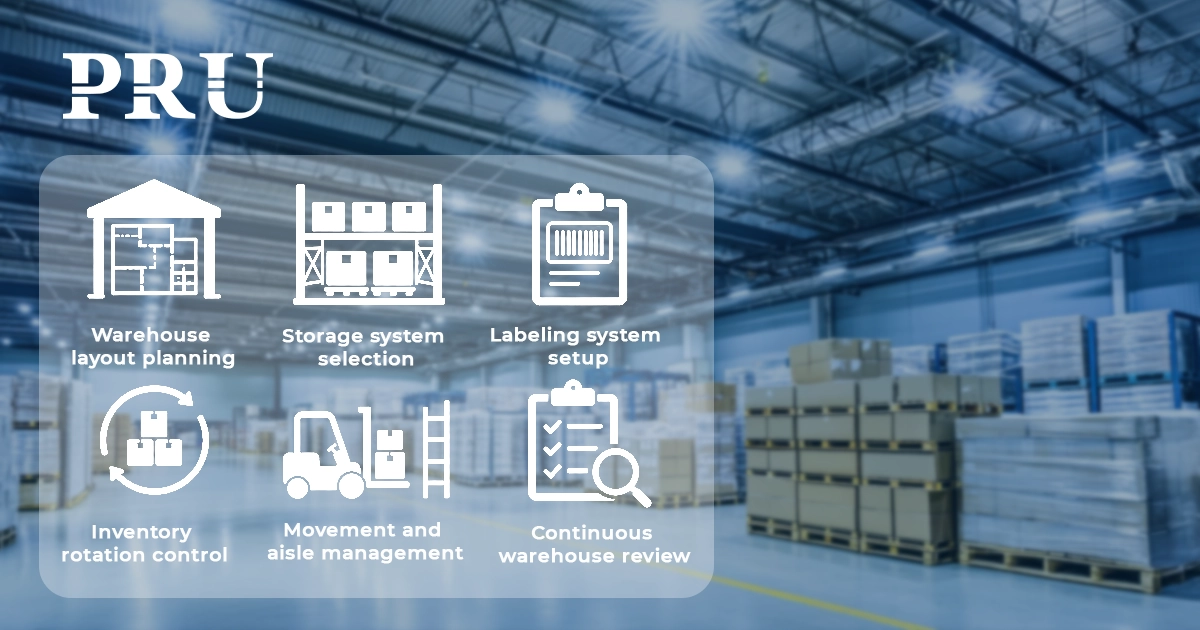
1. Warehouse layout planning
A warehouse should be designed around movement flow rather than available space. When these zones are not clearly separated, operations become slower and less predictable.
Good layout planning is the foundation of how to organize warehouse systems effectively. It reduces unnecessary movement and ensures that each process follows a structured path.
- Receiving area for incoming goods
- Storage area for inventory placement
- Packing area for order preparation
2. Storage system selection
Storage systems should always match the type of inventory being handled. Choosing the wrong system creates long-term inefficiency even if the space looks organized.
Pallet racking works best for bulk goods, cantilever systems are suitable for long or irregular items, and shelving is ideal for small, frequently accessed products.
A well structured storage setup improves space utilization and reduces handling time.
This is where warehouse management ideas become important, especially when scaling operations and handling larger inventory volumes.
3. Labeling system setup
A labeling system ensures that every item has a defined and easy-to-locate position inside the warehouse. Without it, even a well planned facility becomes inefficient over time.
Proper labeling improves speed, reduces picking errors, and makes daily operations more consistent.
It is one of the most practical warehouse management tips used in real warehouse environments.
- Rack numbering system
- Zone identification system
- Barcode or QR code tagging
4. Inventory rotation control
Inventory must move in a structured way to avoid buildup, waste, and inefficiency. One of the most common systems used is FIFO (First In First Out), where older stock is used before newer stock enters circulation.
This helps maintain proper stock flow and prevents outdated inventory from being forgotten in storage.
Fast moving items should always be placed closer to dispatch areas, while slower stock can be stored deeper inside the warehouse. This improves handling speed and reduces unnecessary movement.
5. Movement and aisle management
Warehouse performance is strongly affected by how movement is structured inside the facility. Aisles should always remain clear and properly designed to support both workers and equipment.
When movement paths are blocked or poorly planned, delays start building up throughout daily operations.
A well designed system ensures that goods can move smoothly between receiving, storage, and dispatch without interruption. This directly improves overall efficiency without requiring additional space.
6. Continuous warehouse review
Why Continuous Review Matters
Inventory levels, demand patterns, and operational needs constantly change.
Key Areas to Monitor
- Underutilized storage zones
- Slow-moving inventory
- Workflow bottlenecks
- Inefficient layout areas
Benefits
- Long-term operational efficiency
- Reduced waste and delays
- Better space utilization
- Continuous workflow improvement
This continuous optimization approach is a core part of modern warehouse management tips.
Small adjustments made consistently help maintain long-term efficiency and ensure that warehouse organization remains aligned with real operational requirements.
Why Consistent Warehouse Organization Matters ?
Efficient warehouse operations are not achieved through one-time setup. They depend on consistent structure, proper planning, and continuous improvement in how space and inventory are managed.
When warehouse organization is applied correctly, it creates a system where movement is smoother, storage is clearer, and daily operations become more predictable. Over time, this directly improves productivity and reduces operational delays.
Explore professional warehouse management solutions designed to improve storage efficiency, streamline workflow, and enhance operational performance.
Contact Pallet Rack Unlimited today to build a smarter and more efficient warehouse system tailored to your business needs.
Leave a Reply