
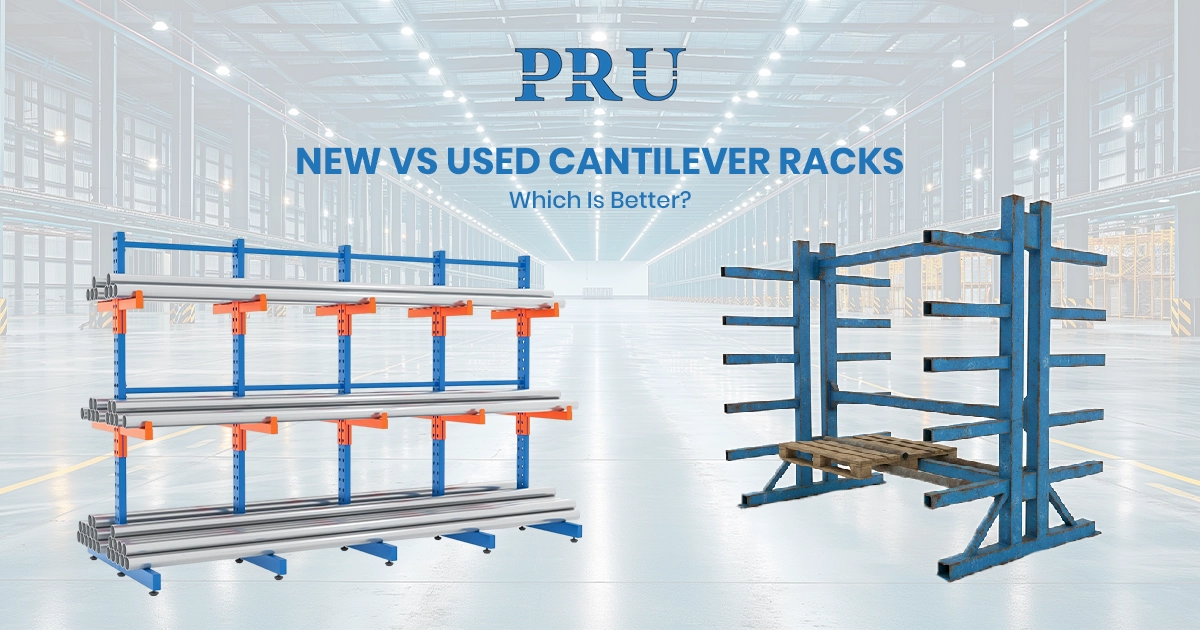
New vs Used Cantilever Racks in Atlanta
A cantilever rack is an industrial storage system specifically designed to store long, bulky, and irregular materials such as steel pipes, lumber, timber, and construction goods. Unlike standard pallet racking systems, it has an open-front structure with vertical columns and horizontal arms, allowing materials to be loaded and retrieved easily using forklifts or manual handling without obstruction.
Within this system, warehouses typically choose between new cantilever racks and used cantilever racks depending on budget, operational needs, and long-term storage requirements
New cantilever racks are freshly manufactured storage systems built with precise load ratings, uniform structural quality, and full durability assurance. They are designed for long-term warehouse use where consistency, safety, and predictable performance are essential.
Used cantilever racks are pre-owned systems that have been previously installed in other warehouses and later resold or reused. Their condition varies based on prior load usage, maintenance history, and overall structural wear, which can directly impact performance and safety.
Compare Cost, Durability, Safety & Long-Term Value Before You Buy
Not every warehouse storage decision is about saving money. In many industrial setups, the real impact comes later, when daily operations begin to depend on how stable and efficient the storage system actually is.
When comparing new vs used cantilever racks in Atlanta, most buyers immediately focus on the price difference. But in real warehouse conditions, cost is only one part of the equation. What matters more is how the system performs under continuous load, how safely it supports long materials, and how well it adapts to operational changes over time.
Cantilever racks are widely used for storing long, bulky materials like pipes, steel, timber, and construction supplies. Because of this, even small structural differences between systems can affect workflow speed and handling safety.
This guide breaks down both options in a practical way so you can understand what actually works better in real warehouse environments, not just on paper.
What Are Cantilever Racks and Where Are They Used?
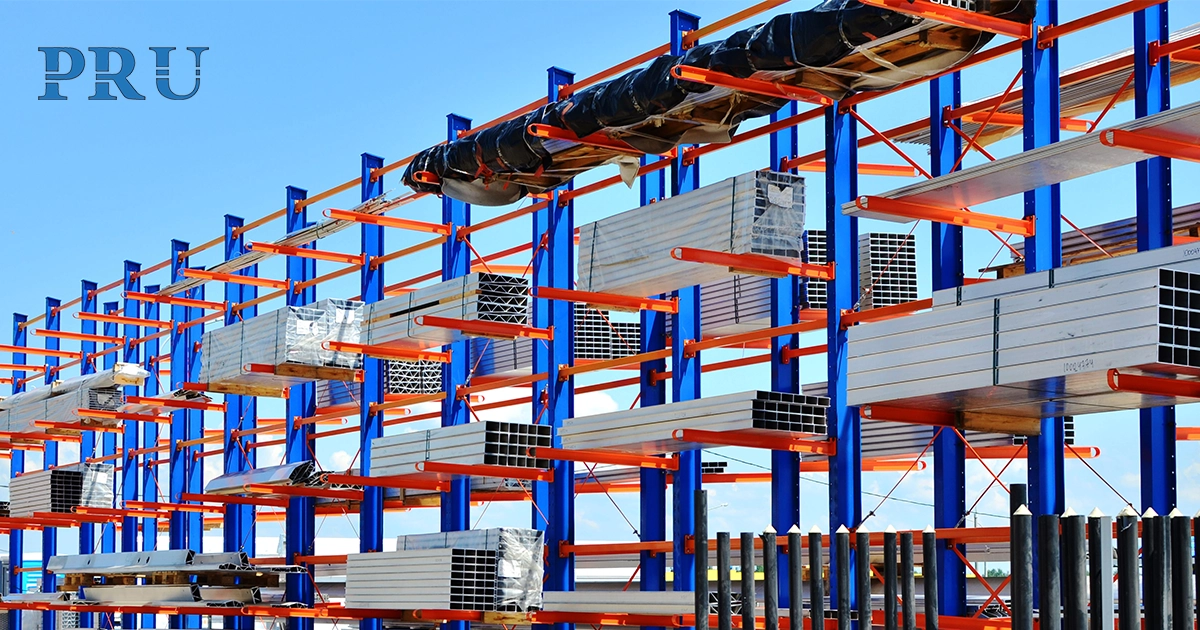
Cantilever racks are industrial storage systems designed specifically for long and irregular materials that cannot be placed on standard pallet racking.
They are commonly used in lumber yards, steel storage facilities, manufacturing plants, and construction supply warehouses. The structure is built using a central column with horizontal arms extending outward, allowing open access from the front without vertical obstruction.
This design makes loading and unloading faster, especially for materials that require forklifts or manual handling over long lengths. Because of this flexibility, cantilever systems are considered one of the most practical storage solutions for industrial-scale material handling.
New vs Used Cantilever Racks — Real Operational Difference
The difference between new and used cantilever racks is not just about cost. It directly affects how predictable and stable your warehouse operations will be.
New cantilever racks are built according to specific load requirements and warehouse layouts. This means every component, from arm length to column height, is designed for a defined operational purpose. In active warehouses where materials are moved daily, this consistency reduces unexpected maintenance and improves overall handling efficiency.
Used cantilever racks operate differently. These systems come from previous installations where usage conditions are not always fully known. Some units may have handled heavy industrial loads, while others may have been lightly used. Because of this, performance can vary depending on wear, past load stress, and structural condition.
In practical warehouse environments, this difference matters. New systems provide predictable performance, while used systems require careful inspection before they can be trusted for long-term use.
Key Factors to Decide Between New and Used Racks
The decision between new and used cantilever racks should be based on how your warehouse operates, not just initial investment cost.
One of the most important factors is load requirement. If your operation involves heavy materials like steel or timber, structural consistency becomes critical. New racks are manufactured with defined load ratings, while used systems may require verification before use.
Another factor is long-term scalability. Warehouses that expect growth or layout changes benefit more from new systems because they allow easier expansion with compatible components. Used systems may limit future modifications depending on availability.
Operational usage also plays a role. High-frequency warehouses with continuous material movement usually prefer new systems due to reliability, while used racks can work in secondary storage or low-traffic areas where demand is lighter.
Key Comparison — New vs Used Cantilever Racks
To understand the difference clearly, here is a direct operational comparison:
- Cost Factor
- New racks require higher initial investment
- Used racks reduce upfront cost significantly
- Structural Reliability
- New racks provide consistent load handling
- Used racks depend on previous wear and usage history
- Safety Level
- New systems meet full design load specifications
- Used systems require inspection before approval
- Long-Term Value
- New racks last longer with minimal maintenance
- Used racks may require early replacement or reinforcement
- Expansion Flexibility
- New systems allow easy scaling and modification
- Used systems may have limited matching components
Common Mistakes Warehouse Buyers Make
One of the most common mistakes in warehouse storage planning is selecting racks based only on price comparison. While budget is important, storage systems directly affect daily workflow, not just capital cost.
Another mistake is ignoring load conditions. Cantilever racks often carry long and heavy materials, and even slight structural weakness can create safety risks during forklift handling.
Many buyers also overlook future expansion needs. A system that works for current storage volume may not support increased inventory or operational changes later, leading to additional redesign costs.
FAQ
Are used cantilever racks safe for industrial use?
Used cantilever racks can be safe if they are properly inspected before installation. Structural condition, load history, and component alignment must be checked to ensure they can handle operational requirements.
Why do warehouses choose new cantilever racks?
New racks are preferred when warehouses need consistent performance, higher safety assurance, and long-term durability. They also provide better flexibility for future expansion.
Can used cantilever racks handle heavy loads?
They can, but only if the structure is still in good condition and has not been previously overloaded. Inspection is necessary before using them for heavy materials.
What industries use cantilever racks most?
They are commonly used in lumber storage, steel distribution, manufacturing facilities, and construction supply warehouses where long materials are handled regularly.
Choosing between new and used cantilever racks in Atlanta depends on how your warehouse operates on a daily basis. While used systems may reduce upfront cost, new systems provide better reliability, structural consistency, and long-term performance.
For warehouses handling continuous material movement, the stability of the storage system directly affects safety and efficiency. This is why many industrial operations prefer new installations when planning long-term use.
If you are evaluating storage systems or planning a warehouse upgrade, getting a professional consultation can help you avoid structural mistakes and choose the right system for your operational needs.
Leave a Reply