
What Are Pallet Rack Uprights? Types, Sizes & How They Work
If you have ever looked at a pallet racking system and wondered what actually holds the whole thing together, the answer is the upright frame. Pallet rack uprights are the vertical backbone of every racking system, and understanding how they work is the first step to building a storage setup that is safe, efficient, and built to last.
This guide covers what pallet rack uprights are, the main types you will encounter, how sizing works, and what to consider when choosing the right frame for your warehouse.
What Are Pallet Rack Uprights?
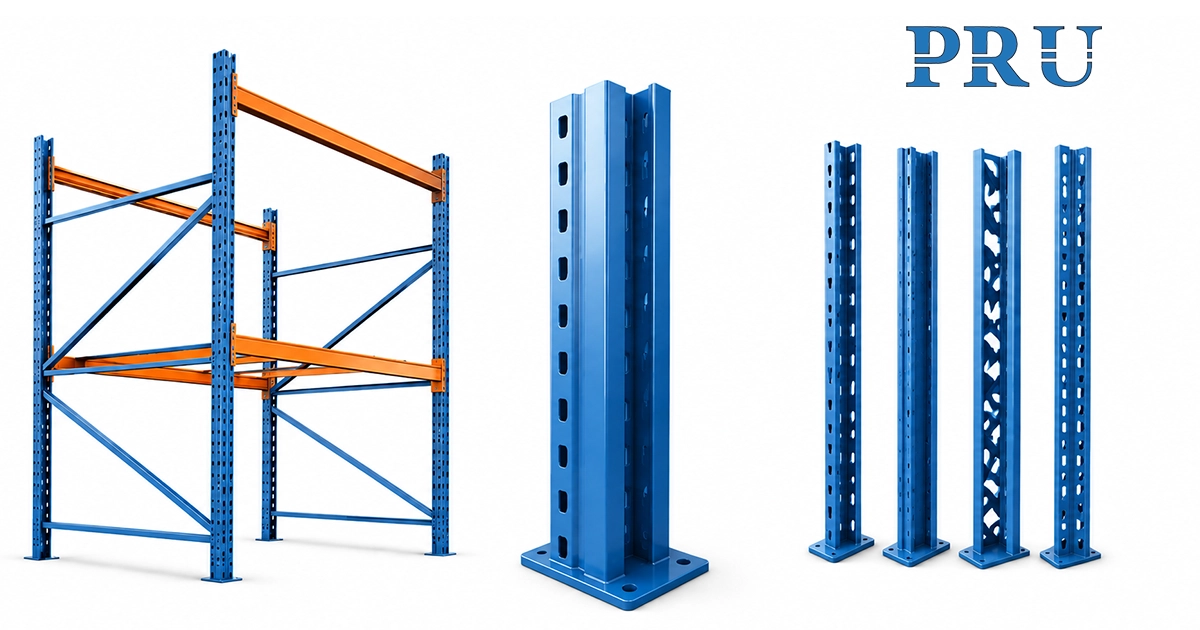
Pallet rack uprights, also called pallet rack frames, are the vertical steel components that support a racking system’s entire load. Each upright is made up of two columns connected by horizontal and diagonal bracing, forming a rigid frame that beams attach to horizontally to create storage levels.
Think of the upright as the skeleton of the rack. The horizontal beams hold your pallets, but it is the upright frame that transfers that weight safely down to the floor. Without a properly rated upright, even the strongest beams cannot carry a load safely.
How Pallet Rack Uprights Work
Every pallet rack system relies on a simple structural principle. Beams connect to the columns of the upright at set intervals, usually through a clip or bolt style connector, and the upright’s bracing pattern keeps the whole frame from twisting or buckling under load.
The strength of a rack is not just about how thick the steel is. It also comes down to:
- Column gauge and shape, which determines how much weight the frame can bear.
- Bracing pattern, since diagonal and horizontal bracing controls lateral stability.
- Footplate design, which spreads the load across the floor and anchors the frame in place.
- Depth and height, which need to match your pallet size and ceiling clearance.
Understanding these basics makes it much easier to compare different types of pallet rack uprights and figure out which one actually fits your operation.
Common Types of Pallet Rack Uprights
Not all uprights are built the same way, and the right choice depends heavily on your storage system and load requirements. Here are the most common pallet rack upright types used in warehouses today.
Selective Rack Uprights
The most widely used option, selective rack uprights support standard selective pallet racking, where every pallet is directly accessible from the aisle. These frames are typically lighter duty and offer flexible depth options for different pallet sizes.
Drive In and Drive Through Uprights
These uprights are built heavier and designed to handle rail supported systems where forklifts drive directly into the rack lane. Because there are no horizontal beams at every level, the upright frame itself takes on more of the structural load.
Push Back Rack Uprights
Used in push back racking systems, these frames support carts or rails that allow pallets to be pushed back and stored several deep. The uprights need to accommodate the added weight of the cart system on top of the pallets themselves.
Pallet Flow Uprights
Built for gravity fed pallet flow systems, these uprights are engineered to support inclined roller or wheel tracks, along with the dynamic forces created by pallets moving through the lane.
Cantilever Uprights
Rather than horizontal beams, cantilever uprights use arms extending from a central column, making them ideal for long or irregularly shaped loads like lumber, pipe, or furniture.
Choosing between these industrial rack uprights depends on your throughput needs, pallet density goals, and the type of material handling equipment you are using.
Pallet Rack Upright Sizes
Sizing an upright frame comes down to two main measurements: height and depth.
Height determines how many beam levels you can fit and how much vertical storage space you can use. Common heights range from around 8 feet for lower clearance warehouses up to 30 feet or more for high bay facilities.
Depth needs to match your pallet dimensions with enough clearance for safe handling. Standard depths are usually 36, 42, or 48 inches, though deeper frames are available for oversized loads.
Getting sizing right matters just as much as picking the correct type. An upright that is too tall for your ceiling clearance or too shallow for your pallets creates safety risks and wasted space, no matter how well built the frame is.
Load Capacity and Safety Considerations
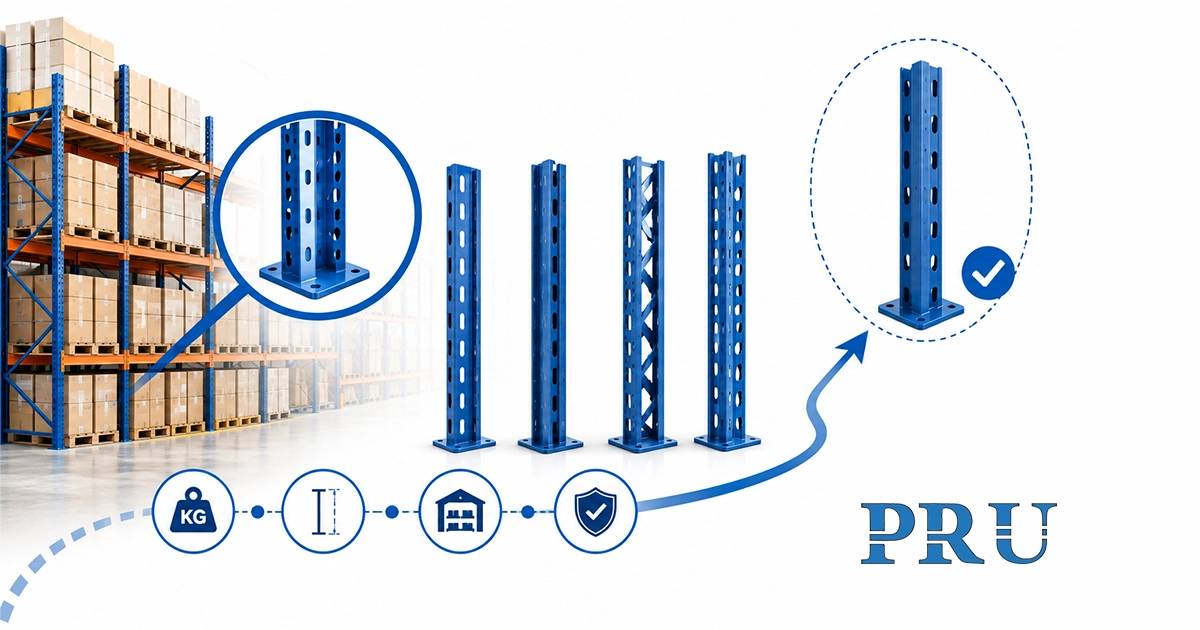
Every pallet rack upright comes with a rated load capacity set by the manufacturer, and that rating depends on the column gauge, bracing, height, and how the frame is anchored to the floor. Overloading a frame, even by a small margin, can lead to buckling or collapse.
A few safety basics to keep in mind when working with any type of warehouse rack uprights:
- Always anchor frames to the floor according to manufacturer specifications.
- Install column protectors in high traffic forklift areas to prevent impact damage.
- Inspect uprights regularly for bends, rust, or damaged welds.
- Never exceed the rated capacity posted on the rack’s load tag.
How to Choose the Right Pallet Rack Upright for Your Warehouse
Picking the right upright frame comes down to a handful of practical questions. What are you storing, and how heavy are the pallets? How much floor space and ceiling height do you have to work with? Do you need direct access to every pallet, or are you optimizing for density with a drive in or push back system?
Answering these questions first makes it much easier to compare the different pallet rack uprights on the market and land on a system that fits your warehouse rather than forcing your operation to fit the rack.
If you are ready to explore options, Pallet Rack Unlimited offers a wide range of frames built for every type of warehouse layout and load requirement.
Frequently Asked Questions
What is the difference between a pallet rack upright and a pallet rack frame? These terms are generally used interchangeably. Both refer to the vertical steel structure made of columns and bracing that supports the horizontal beams in a pallet racking system.
How do I know what size upright I need?
Measure your tallest pallet load and account for ceiling clearance, sprinkler codes, and beam spacing to determine height, then match depth to your pallet footprint with proper clearance on each side.
Can different types of pallet rack uprights be mixed in the same warehouse? Yes, many warehouses use a mix of selective, drive in, and push back systems depending on the storage needs of different product lines, as long as each area is engineered and installed correctly.
How often should pallet rack uprights be inspected?
Most safety guidelines recommend a full visual inspection at least once a year, with regular informal checks by warehouse staff for visible damage after any forklift contact.
Leave a Reply